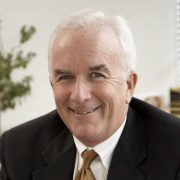
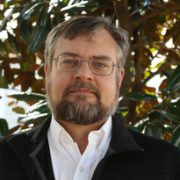
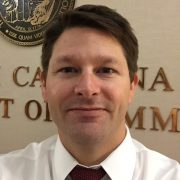
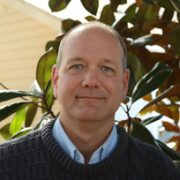
The implementation of the Oyster Restoration and Protection Plan for North Carolina: A Blueprint for Action 2015-2020 (Blueprint) is overseen by a statewide Oyster Steering Committee.

The Committee Members:

  • Provide guidance and recommendations on actions necessary to adequately protect, promote and restore oysters in the state through the implementation of the Blueprint;
  • Set the agenda for regional and focus area workgroup work products;
  • Provide guidance and review of the workgroup work products;
  • Review and approve revisions to the Blueprint as it evolves;
  • Review and approve the annual State of the Oyster Report.

Adam Tyler

Commercial Fisherman

reeladdiction4life@yahoo.com

Mr. Tyler is a commercial fisherman from Smyrna, N.C. Tyler participates in multiple fisheries, including shellfish, harvesting primarily oysters from public waters and his own bottom leases. He is active in the fishing community promoting sound practices and works with fisheries managers to ensure that management of North Carolina’s fisheries are based on sound, defensible science. Mr. Tyler has collaborated with multiple faculty members, students and staff at the UNC Institute of Marine Sciences on projects seeking to better understand the ecology of oysters in North Carolina waters and to use this knowledge to improve cultivation, rehabilitation and restoration practices. He presently serves on the N.C. Division of Marine Fisheries Oyster and Hard Clam Fishery Management Plan Advisory Committee.

Anne Deaton

N.C. Division of Marine Fisheries, Habitat Program Manager

910.796.7215
anne.deaton@ncdenr.gov

Anne’s experience with shellfish includes working for N.C.’s Shellfish Sanitation Program, surveying shorelines for potential pollutant sources that could be causing bacterial pollution and testing water and shellfish and assisting a local shellfish grower to spawn and grow out hard clams. Those experiences taught Anne how important it is to protect our existing oyster reefs and water quality.

More recently she has worked for the DMF on drafting the N.C. Coastal Habitat Protection Plan, and implementing the plan recommendations. A priority recommendation of the plan is to restore oyster habitat through creation of additional oyster sanctuaries, living shorelines that incorporate intertidal oyster reefs, and reducing sedimentation into tidal creeks. Anne also work closely with the division’s mapping program and shellfish lease program, and has participated in the regional oyster restoration planning.

Braxton Davis

North Carolina Coastal Federation, Executive Director

252.393.8185
Braxtond@nccoast.org

Braxton Davis is the Director of the N.C. Division of Coastal Management, which is headquartered in Morehead City and oversees the State’s coastal planning, permitting, and Coastal Reserve programs for the 20 coastal counties. He also serves as past chair of the Coastal States Organization in Washington D.C., and is currently chairing a multi-state committee on beach and inlet management issues.

Previously, Braxton served as Director of the N.C. Division of Marine Fisheries and as Director of Policy and Planning for the S.C. coastal management program in Charleston. He earned a bachelor’s degree in environmental science from the University of Virginia, a master’s degree in biological sciences from Florida International University, and a Ph.D. in marine affairs from the University of Rhode Island.

Chris Matteo

NC Shellfish Growers Association;
Chadwick Creek Oysters (chadwickcreek.com)

chrismatteo@gmail.com

Chris owns Chadwick Creek Oysters and seed nursery in Bayboro and Siren’s Cove Shellfish in Beaufort. He is the acting President of the NC Shellfish Growers Association. A former investment broker, Chris and his family are now investing in our coastal waters and their oyster business.

Dave Cerino

Carteret Community College

252.222.6114
cerinod@carteret.edu

Dave Cerino is a professor and aquaculture coordinator for Carteret Community College.

dave eggleston

David Eggleston

North Carolina State University, Director of the Center for Marine Sciences and Technology

252.222.6301
eggleston@ncsu.edu

Dr. Eggleston leads the marine ecology and conservation program and is also the director of the Center for Marine Science and Technology at N.C. State University. Dr. Eggleston’s research interests include fisheries ecology, habitat restoration, conservation biology, detected ecological impacts, behavioral ecology, population dynamics and modeling and marine science education. Dr. Eggleston has been conducting basic and applied research on oyster populations since 1985.

Dr. Ami Wilbur

University of North Carolina Wilmington, Director of Shellfish Research Hatchery and Associate Professor of Biology

910.962.2389
wilbura@uncw.edu

Dr. Wilbur’s research and teaching interests include shellfish genetics, restoration and mariculture. Dr. Wilbur has worked with a variety of shellfish for over 20 years, and her research projects have ranged from scallop restoration in Florida to the development of high through-put assays for detection of oyster parasites. As the director of the hatchery, Dr. Wilbur oversees operations, and is directing research efforts in the selective breeding of oysters, evaluation of the triploid advantage and the development of culture practices for bay scallops and sunray Venus clams.

Dr. Joel Fodrie

University of North Carolina Institute of Marine Sciences and Department of Marine Sciences, Assistant Professor

252.726.6841
jfodrie@unc.edu

Dr. Fodrie is broadly interested in the population ecology of coastal fishes and bivalves. Currently, he has Non-Governmental Organization grants focused on: (a) restoration ecology of intertidal oyster reefs, including controls of reef performance and delivery of ecosystem services; (b) effects of salinity perturbations on intertidal and subtidal oyster reef communities; and (c) larval population connectivity of oyster reefs throughout Pamlico Sound.

John Fear

North Carolina Sea Grant, Water Resources Research Institute, Deputy Director

919.515.9104
jmfear@ncsu.edu

John Fear is currently the Deputy Director of North Carolina Sea Grant (NCSG) and the Water Resources Research Institute. NCSG has high interest in helping the North Carolina oyster population bounce back from historic lows. This interest stems from an ecosystem perspective as well as a safe and sustainable seafood supply perspective. Prior to Sea Grant, Fear worked with the Division of Coastal Management’s Coastal Reserve program and worked directly with several oyster based living shoreline projects and oyster reef restoration projects.

Ken Riley

Marine Spatial Ecology Division; National Oceanic and Atmospheric Administration,
Fisheries Biologist

252.728.8750
ken.riley@noaa.gov

Dr. Kenneth Riley is an interdisciplinary marine ecologist who recently joined NOAA’s Marine Spatial Ecology Division. Ken previously worked out of the NOAA Beaufort Laboratory as a Fisheries Biologist for NOAA’s National Marine Fisheries Service (NMFS) in the Habitat Conservation Division. Prior to joining NMFS, Ken worked with NOAA’s National Ocean Service where his research capitalized on the impetus to equip the nation’s coastal decision-makers with spatial planning and ecoforecasting tools to make informed and confident decisions regarding aquaculture in the coastal ocean.

Ken was a founding member of the NOAA Coastal Aquaculture Planning and Environmental Sustainability Program (CAPES). His research focused on developing analytical tools and modeling applications used for siting aquaculture operations and restoration activities. His research has been used to address a variety of marine aquaculture issues around the nation, including rulemaking for offshore aquaculture operations in federal waters of the Gulf of Mexico.

Ken received a M.S. in Fisheries from Louisiana State University and a Ph.D. in Interdisciplinary Biology from East Carolina University. He takes great pleasure in presenting his research and developing collaborations with academic, government, and industry stakeholders.

Niels Lindquist

University of North Carolina Institute of Marine Sciences, Professor of Marine Sciences

252.726.6841 x136
nlindquist@unc.edu

Dr. Linquist began his oyster research in 2009, initially focusing on the impact of carbonate eroding sponges on oysters and oyster habitats. He has recently expanded to examine environmental drivers of oyster and sponge populations and their interactions. Dr. Linquist’s current research projects also include: studies of palatability and chemical defense of marine invertebrate larvae, development of a broad spectrum sunscreen comprising of natural products of marine hydroid, and studies of natural products of N.C. seaweeds and marine invertebrates, their ecological roles, and possible practical applications (i.e. as anticancer, antiviral and antibacterial drugs, sunscreens, anti-fouling agents and agrochemicals)

Todd Miller

North Carolina Coastal Federation

252.393.8185
toddm@nccoast.org

Todd Miller is the founder of the North Carolina Coastal Federation, a nonprofit working for a healthier North Carolina coast.

A coastal North Carolina native from Carteret County, it was here in 1982 that Miller found his passion—working to keep the coast a great place to live, work and play. Forming partnerships and rallying volunteers, Miller grew the organization from a one-man (and a dog) venture in a back room of his house to three offices covering the North Carolina coast. With 30+ staffers and a multi-million dollar budget targeted for educating the public, advocating for a clean coast and restoring water quality and shorelines, the Coastal Federation takes on projects and partners with others in hundreds of endeavors that influence these priorities.

A graduate of the University of North Carolina at Chapel Hill, from which he holds undergraduate and master’s degrees. Along with numerous other awards and recognitions, Miller is a founding board member of Restore America Estuaries and currently serves on the Board of Visitors for the UNC Institute for the Environment and as a board member on the Policy Committee for the Albemarle-Pamlico Estuary Partnership.

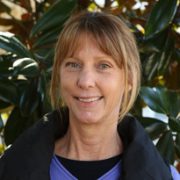
Tom Looney

North Carolina Coastal Federation

tflooney52@gmail.com

Tom recently retired as vice president and general manager at Lenovo North America. Prior to that he spent 30 years with IBM in various leadership roles. He is currently chairman of the board of trustees for Wake Technical Community College and on the boards of the North Carolina School of Science and Math and of the Economic Development Partnership of North Carolina. He is a member of the North Carolina Coastal Federation President’s Council and has been a volunteer for the federation for 20 years.

Troy Alphin

University of North Carolina Wilmington, Senior Research Associate with UNC-Wilmington Department of Biology and Center for Marine Science

910.962.2395
alphint@uncw.edu

Mr. Alphin is a benthic ecologist and shellfish biologist who has worked on issues related to trophic dynamics and ecosystem functions of oysters. He is the lead on developing the Shellfish Aquaculture Siting tool (uncw.edu/benthic/sitingtool/). He is focused on critical estuarine, beach , near shore and offshore systems. Mr. Alphin has previously been involved as a Shellfish Advisory Committee Member to the N.C. Division of Marine Fisheries, on the Fisheries Management Plan committees, the Strategic Habitat Area assessment committee for region 1, the Board of Directors of the East Coast Shellfish Research Institute and is the Vice President of the East Coast Shellfish Research Institute.

Will Best

North Carolina Department of Commerce, JLUS Project Manager

919. 814. 4676
wbest@nccommerce.com

Will Best joined the North Carolina Department of Commerce in 2003.  Best has worked in the areas of geographic information systems (GIS), regional and community planning, military joint land use studies and government policy.  Best, who is from Carteret County, is the project manager for the Seymour Johnson AFB and Dare County Range Joint Land Use Study (JLUS).  This Department of Defense funded study directly involves eastern and northeastern North Carolina counties that are impacted by Special Use Airspace (SUA), Military Training Routes (MTRs) and Military Operations Areas (MOAs).  The majority of the study area counties have biological resources such as wetlands or migratory corridors and maritime environments that contribute community and economic development.

William (Bill) Crowell Jr.

Albemarle- Pamlico National Estuary Partnership, Director

919.707.8633
bill.crowell@apnep.org

Dr. Crowell directs the Albemarle Pamlico National Estuary Partnership. In this position he sets a strategic vision for APNEP and ensures the implementation of APNEP’s Comprehensive Conservation Management Plan. The 2012-2022 CCMP identifies three actions specifically targeted at restoring oyster habitats to improve water quality and other ecosystem functions they include: construct new oyster habitats; reduce the adverse impacts of harvest to existing oyster habitat; and facilitate research to improve oyster restoration technologies and methods. He is also a certified planner (AICP), a North Carolina certified environmental educator, and a fellow of N.C. Natural Resources Leadership Institute.

© 2025 NC Oysters.